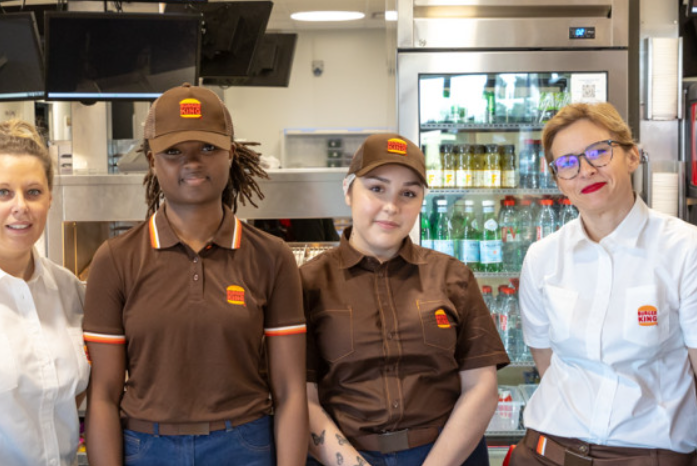
The images presented here stem from research and exploration. They do not constitute the realization of the work; in my practice, the proposal itself serves as the work.
Statement of Intent - work inspired by Baghera Universe
Context of Creation
After eighteen years of entrepreneurship and multiple creations — novels, webtoons, music videos, transmedia universes —, after hundreds of unanswered applications for artist residencies, calls for projects, galleries, I find myself facing a brutal truth: the contemporary art world seems impermeable to my work. Each portfolio submission remains unanswered, each creative proposal meets institutional silence.
It's in this tipping point that The Burger King Phase is born — a work that documents my transition from conceptual artist to fast-food employee. An assumed fall, transformed into an artistic gesture.
Conceptual Approach
This work interrogates the porous boundary between personal failure and artistic performance. By applying to Burger King, I'm not abandoning my practice: I'm extending it. I transform this economic necessity into narrative material, this precarity into aesthetic proposition.
The Burger King Phase follows in the lineage of my works inspired by the Baghera Universe, where fiction and reality intertwine. Here, it's my own life that becomes the experimental ground, the place where conceptual art meets economic survival. The artist doesn't disappear behind the employee: he documents him, observes him, archives him.
Protocol of the Work
The work unfolds according to two possible scenarios, each revealing a different truth about mechanisms of acceptance and rejection:
Scenario 1: Acceptance
If Burger King recruits me, the work materializes through a series of photographs taken furtively by an accomplice posing as a customer. These images show me in uniform, performing my duties — preparing burgers, cleaning, customer service.
The discrepancy is deliberately cultivated: these photographs are taken as if I were a celebrity "caught" (like the Whopper) in a food service job, reproducing the codes of paparazzi and tabloid press. Except I'm not famous. This staging reveals our projections about celebrity, failure, and the morbid fascination with artists' downfall.
Scenario 2: Rejection
If Burger King refuses my application, the work takes on a more acute tragi-comic dimension. Even the "last resort" job rejects me. This situation reveals the complete absurdity of the system: overqualified for a food service job, not recognized enough for the art world. The work then becomes testimony to a double exclusion.
Constitutive Elements of the Work
Screenshot of the application: Founding document, digital trace of the tipping point
My CV: Exposed as a ready-made, revealing the contrast between journey and destination
Photographic series (if accepted): Furtive documentation of employee daily life
Correspondence (acceptance or rejection): Archive of institutional decision
Audio testimonies: Fragments of my experience, interior monologues
Critical Dimension
The Burger King Phase doesn't seek compassion, but interrogates the structures that determine artistic value. It questions:
Exclusion mechanisms of the contemporary art world
The implicit hierarchy between creation and subsistence
The possible recuperation of failure as artistic material
The involuntary performativity of precarity
This work is part of a radical honesty approach. It refuses both the romanticization of artistic poverty and victimization. It transforms an economic necessity into a conceptual gesture, without cynicism or complacency.
Link with the Baghera Universe
There's something troubling in this coincidence: I created a universe where work doesn't exist, where inhabitants live in an idleness orchestrated by the AI Paul Lia. This fiction didn't come from nowhere — it emanates directly from my own relationship to work, or rather from my systematic avoidance of wage labor.
Since childhood, I've fled constrained work: already at school, then during eighteen years of entrepreneurship to escape wage labor. My social benefits allowed me this luxury, this assumed marginality. I literally created an imaginary world in the image of my own existence: without work, without productive constraint.
The Burger King Phase reveals the inverted prophecy: the artist who dreamed of a world without jobs finds himself, at the end of the system, forced to seek one. Fiction caught up by reality. Personal utopia that crumbles (like fries) in the face of economic necessities.
This work perfectly embodies my practice: it brings the questions of my fictional universes into tangible reality, but this time, it's my own life that becomes the experimental ground. Conceptual art doesn't remain in abstraction — it anchors itself in lived experience, reveals its contradictions, assumes its flaws.
Exhibition Modalities
The work can be presented as a documentary installation: screens, photographs under plexiglass, framed administrative documents. It can also be activated as a performance, where I tell this experience live.
Each element is accompanied by its "instructions for use" — certificate of conceptual authenticity that constitutes the work in its essential form, whether realized or not.
The Burger King Phase is not failure transformed into art: it's art that fully assumes its precarious condition, that transforms its own fragility into creative force.
Complementary note: This work can be realized independently of its acceptance or rejection by Burger King. The artistic intention preexists its narrative resolution, in accordance with my conceptual practice.
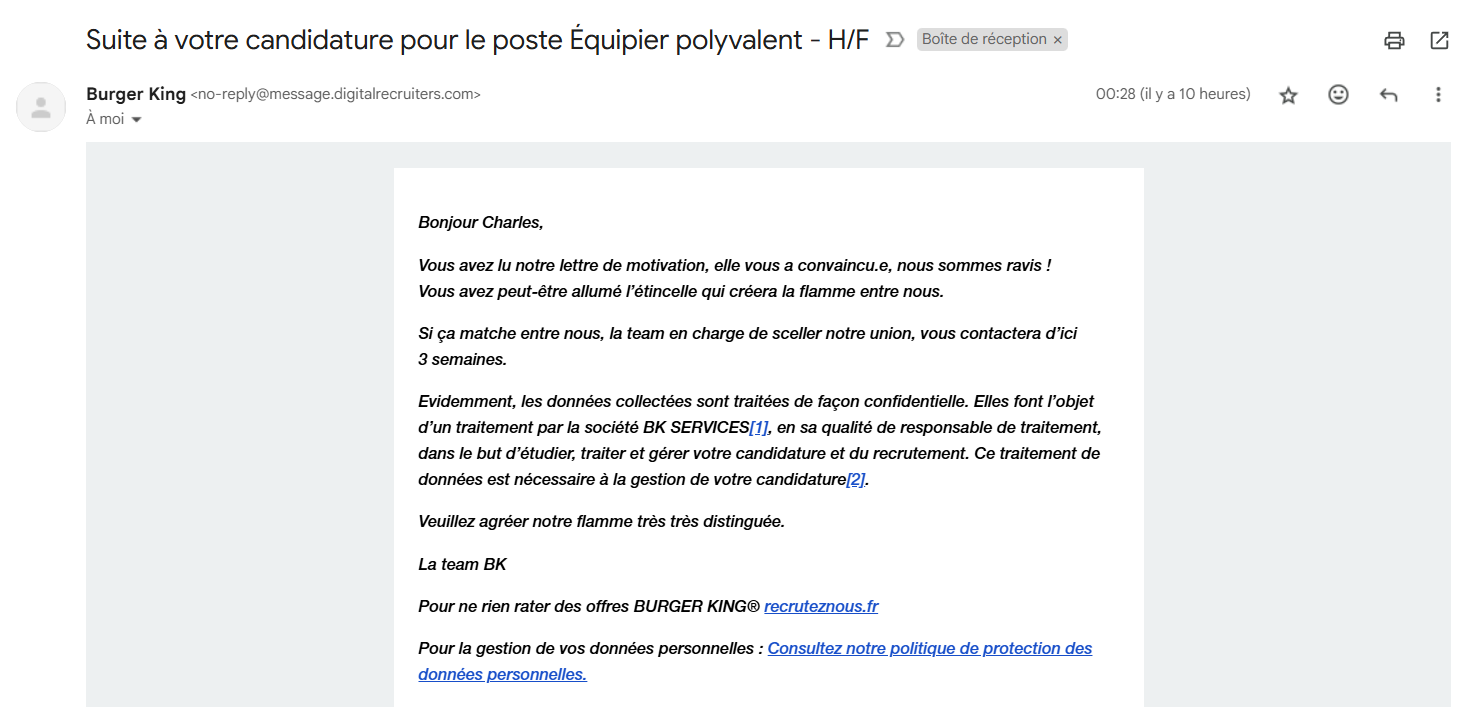
The images presented here stem from research and exploration. They do not constitute the realization of the work; in my practice, the proposal itself serves as the work.