Statement of Intent
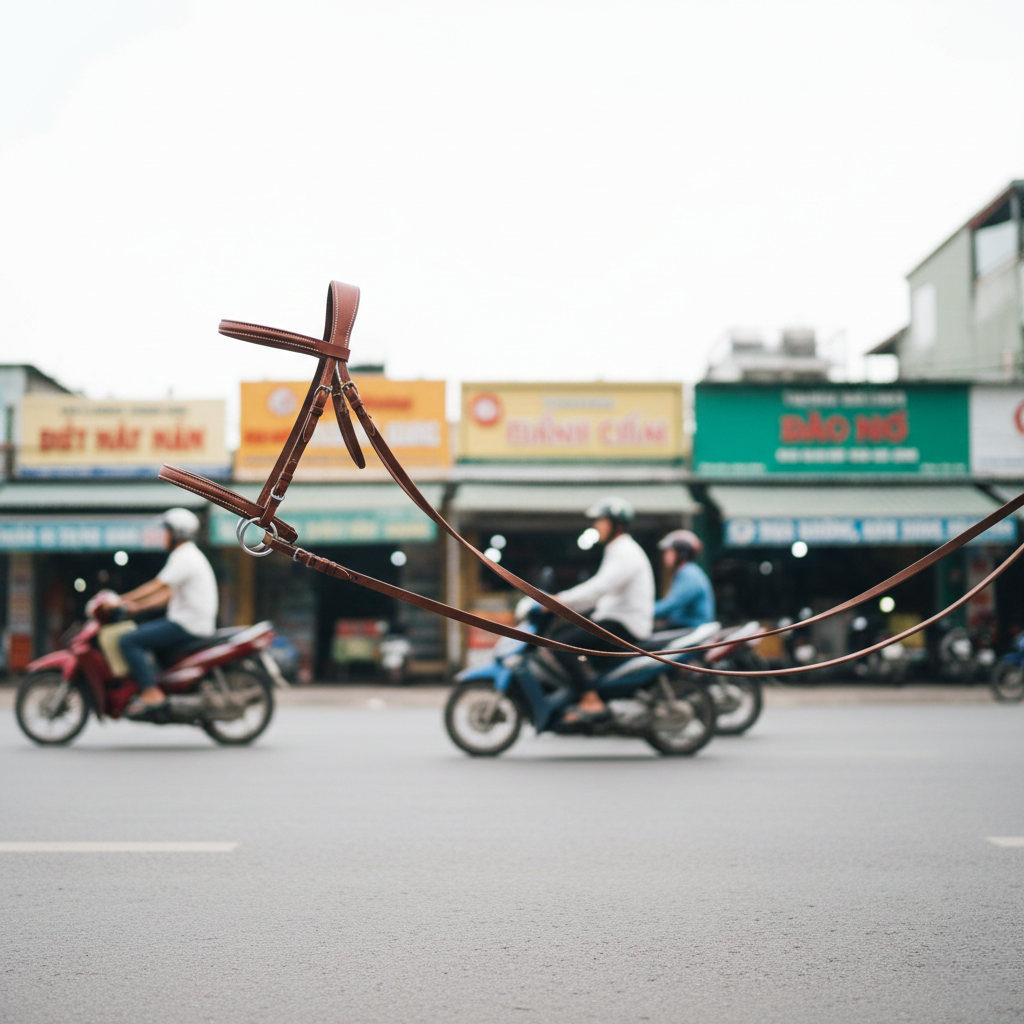
There is in the streets of Saigon an absence that stands upright. Among the scooters, the noise, the continuous flow of the city, something is missing — and yet you feel it. A presence the eye cannot catch but the body recognizes.
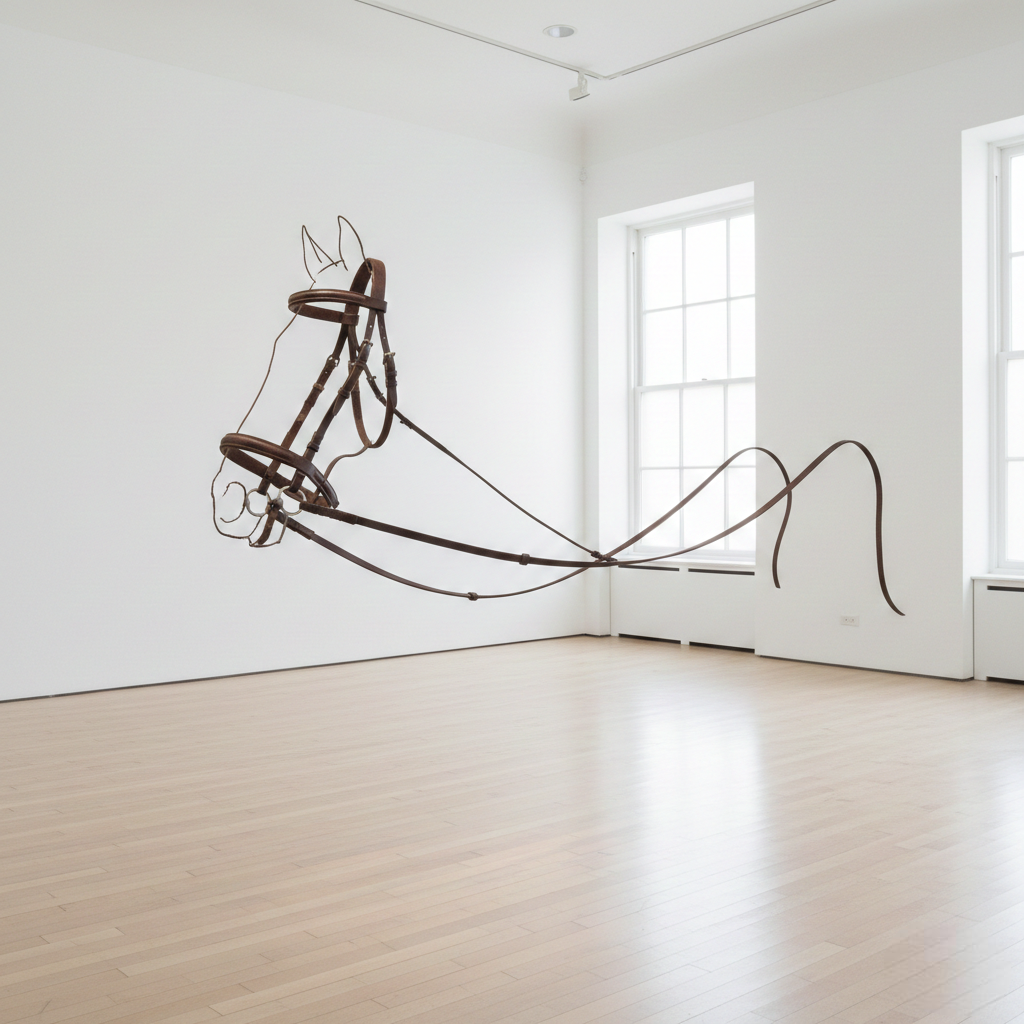
This work starts from an image: a harness held taut in the void. Not laid down, not abandoned — taut. As if the horse were there. As if the rider were there too. Both invisible, but present in the very tension of the object.
I don't show the horse. I show what proves it exists.
This logic, I find it in the Cải Lương — the traditional Vietnamese opera — where an actor holds a whip to make a horse exist on stage. The audience completes the picture. The animal doesn't need to be there: the gesture is enough to invoke it. I come from the performing arts myself, from a family where the body on stage says what words cannot. I recognize in this convention something I know intimately: the object or gesture that makes exist what it designates.
But here I remove even the body. Only the object remains. The taut harness is the sole proof.
This work is born in Saigon, in this Year of the Horse. Not to celebrate a symbol, but because the city is currently honoring something that has disappeared from its streets. The horse is no longer here. It lives in collective memory, in prints, in legends. It has become invisible. The harness makes it exist still — precarious, silent, but real in the tension it generates.
This is ultimately the same question I ask throughout my practice: does a work need to exist to be alive? Here the answer is in the object itself. The taut harness does not represent the horse. It contains it.
Certificate
Hanse is not necessarily intended to be realized. The work exists primarily as a protocol — a tension, a proposition, an object that proves what is not visible.
This certificate attests to the authenticity of the conceptual work Hanse created by Charles Ketchup. The work in its essential form is constituted by the protocol itself, as described in the instructions below.
Each realization of the protocol produces documentary elements that may include: a physical installation of the harness in an exhibition space, an image of the invisible horse in the streets of Saigon, and photographs of the installation. These elements are not the work itself, but its material traces, its physical manifestations, its archival fragments.
The work can be acquired, realized or not by its acquirer. Whether it remains potential or takes form, it already engages a reflection on absence as presence, on what survives disappearance, and on the object as proof of what cannot be seen.
Instructions for Use
1. The Object
A horse harness — bridle, reins, bit — is the sole physical element of the work. It must be a real harness, functional, not decorative.
2. Installation
The harness is installed in the exhibition space as if a horse and rider were present — fully harnessed, reins held taut. The tension must be visible. Nothing holds it from the other end. The horse is not represented, suggested, or symbolized. It is simply absent. The viewer completes.
The height, position and orientation of the installation are left to the judgment of the executor, as long as the tension of the harness remains the central, undeniable visual fact.
3. Presentation in the Exhibition Space
The work is presented with:
• This instructions for use document
• The certificate of authenticity
• An image showing an invisible horse moving through the streets of Saigon, among scooters and traffic — the harness floating taut in the urban flow. This image is a documentation of intent, not a realization of the work.
4. What the Work Is Not
The work is not a representation of a horse. It is not a tribute to Vietnamese culture. It is not a sculpture. It is a protocol of tension — the minimum proof that something exists without being shown.