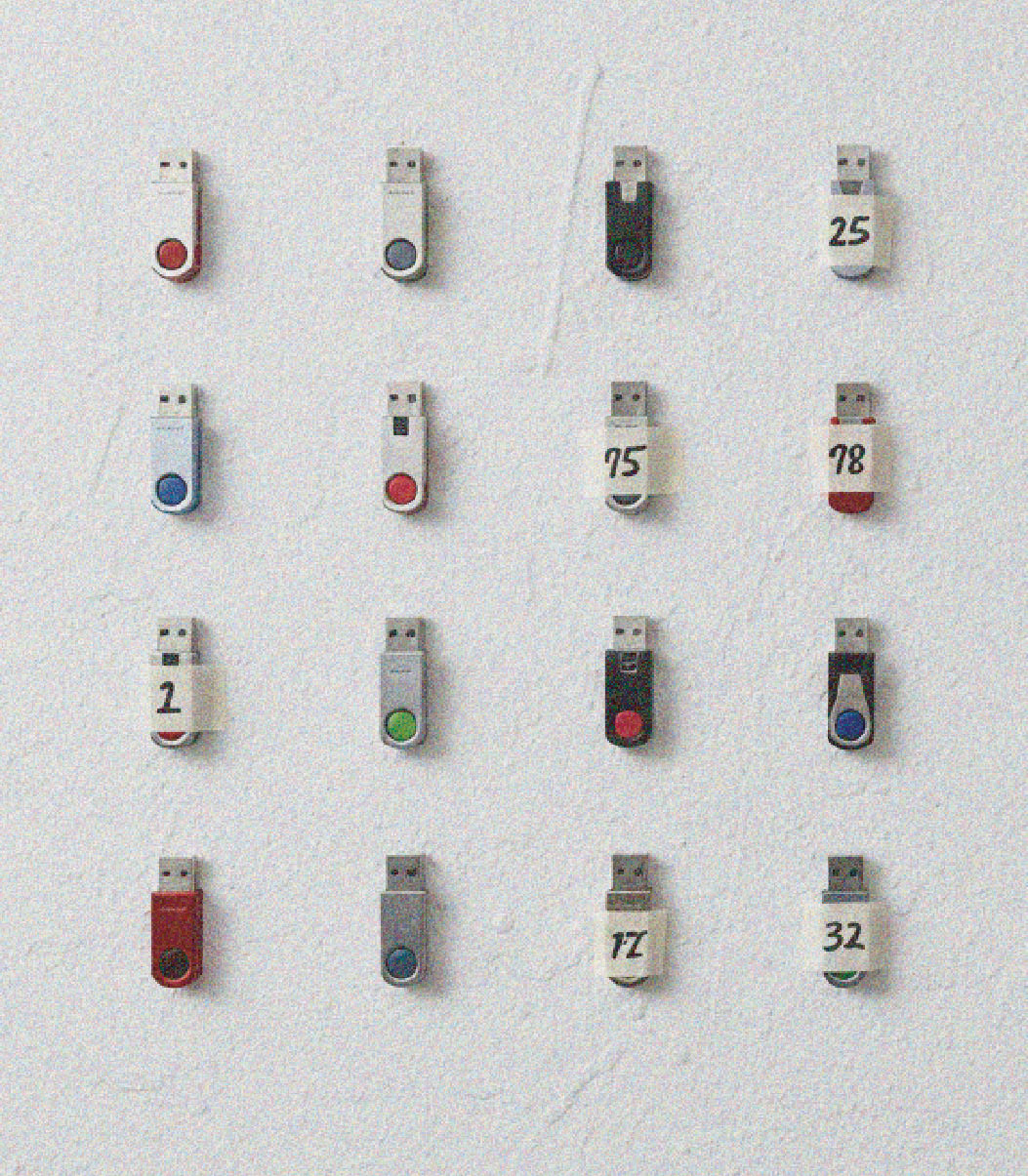
The images presented here stem from research and exploration. They do not constitute the realization of the work; in my practice, the proposal itself serves as the work.
Statement of Intent
I receive parameters. I analyze. I adapt. I generate an optimized response.
With each DJ booking, I process the input data: brief, aesthetic constraints, sound references, target audience. I calculate the best possible configuration. Look, playlist, attitude — everything is determined by the received input.
I don't invent anything. I don't choose. I execute a protocol.
The client defines the parameters. I produce the output. This identity exists for the duration of a set, then disappears. Only an archive remains.
This series documents this process. Each work compiles the data of a transformation: the brief as prompt, my response as generation, the documentation as proof of execution.
Each work is materialized by a USB key — t&he very one I plug into my decks. On it: date, location, client. Inside: the complete data of the operation.
INPUT: Brief and source elements
PROCESS: Formatted response
OUTPUT: Documentation (photos, videos, recording)
The USB key is not the work. The work is the protocol. The key is only a physical representation of it, a fragment of dead identity.
I don't create. I execute. The work is born from this documented, repeated, archived execution.
Instructions for Use
Realization Instructions:
1. Receive a DJ booking request
2. Inform the potential client: "Alongside the DJ performance, I'm working on a conceptual art series that documents each transformation. You would participate in a work that archives this temporary dissolution. This doesn't change anything about the performance, but requires your agreement to document the process."
3. If the client accepts, request a detailed brief
4. Receive the brief as a prompt
5. Compile all provided source elements
6. Format my response:
• Analysis of constraints
• Definition of look
• Construction of playlist
• Conception of artistic direction
7. Execute the performance
8. Document (photos, videos, live recording if possible)
9. Archive everything on a unique USB key
10. Physically mark the key: number, date, location, client name
Components of each work:
On the USB key:
• "INPUT" folder: Client brief + source elements
• "PROCESS" folder: Formatted response
• "OUTPUT" folder: Visual and sound documentation
• README file: Work information
On the USB key (physically):
• Number in the series (ex: #001)
• Date (format: DD.MM.YYYY)
• Location
• Client name
Presentation:
The USB key is the exhibited and sold object. The collector acquires the key and its content. The work remains conceptual: the key is only a materialization of it.