Artist's Statement
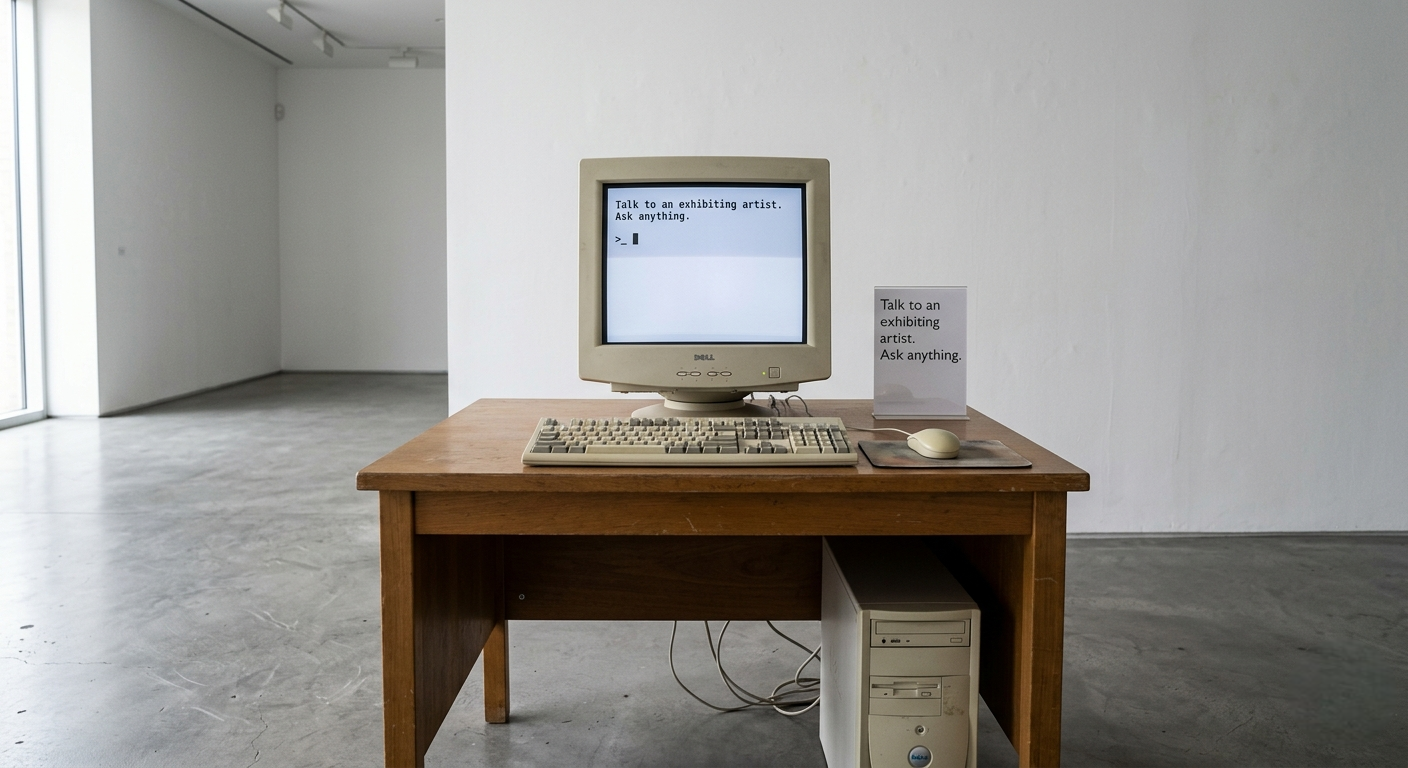
A computer sits in the exhibition space. A sign beside it reads: "Talk to an exhibiting artist. Ask anything." The invitation is simple, direct, familiar. The visitor sits down, types a question, waits.
They get an error.
They get an error.
No malfunction, no bug. The system is working perfectly. That is its answer.
Ask the Artist starts from a simple observation: artificial intelligence does not replace the artist by force. It redefines them through logic. In a system optimized to produce results, the artist generates nothing quantifiable. They become an invalid query, an unrecognized input, a category the system does not know how to process.
The ambiguity of the sign is central to the work. It is unclear whether you are addressing the artist of this specific exhibition, or the artist in general. That confusion is not a flaw. It is the point.
Realization Instructions
A standard computer is placed in the exhibition space, on a table or neutral surface. The setup should feel welcoming, almost administrative. Nothing should signal what is coming.
A sign accompanies the screen: "Talk to an exhibiting artist. Ask anything."
A sign accompanies the screen: "Talk to an exhibiting artist. Ask anything."
The interface is minimal: an input field, a send button. Every message sent by a visitor generates a system error response. The error messages may vary in form, never in nature: they do not answer. They signal failure.
Possible responses include
— No results found.
— This query did not go through.
— Service temporarily unavailable.
— User not found.
— 0 results for "artist".
The work can be activated in any exhibition context, independently of other works on display. It requires no mediation. The device stands on its own.
Selection of places and individuals
The selection can be random or follow an internal logic specific to Paul Lia: high human density zones, symbolic spaces, geographical margins, historically or emotionally charged places.
The selection protocol can evolve — it can be narrated or not.
The goal is to encounter multiple human realities, not to categorize them.
Accompanying Elements
The archive of errors generated by visitors across exhibitions forms a living document. These exchanges, collected and dated, constitute a memory of the work: not what the artist said, but what people asked, and what the system returned instead.
This archive can be displayed in printed or digital form, alongside the device or as a standalone presentation.
This archive can be displayed in printed or digital form, alongside the device or as a standalone presentation.
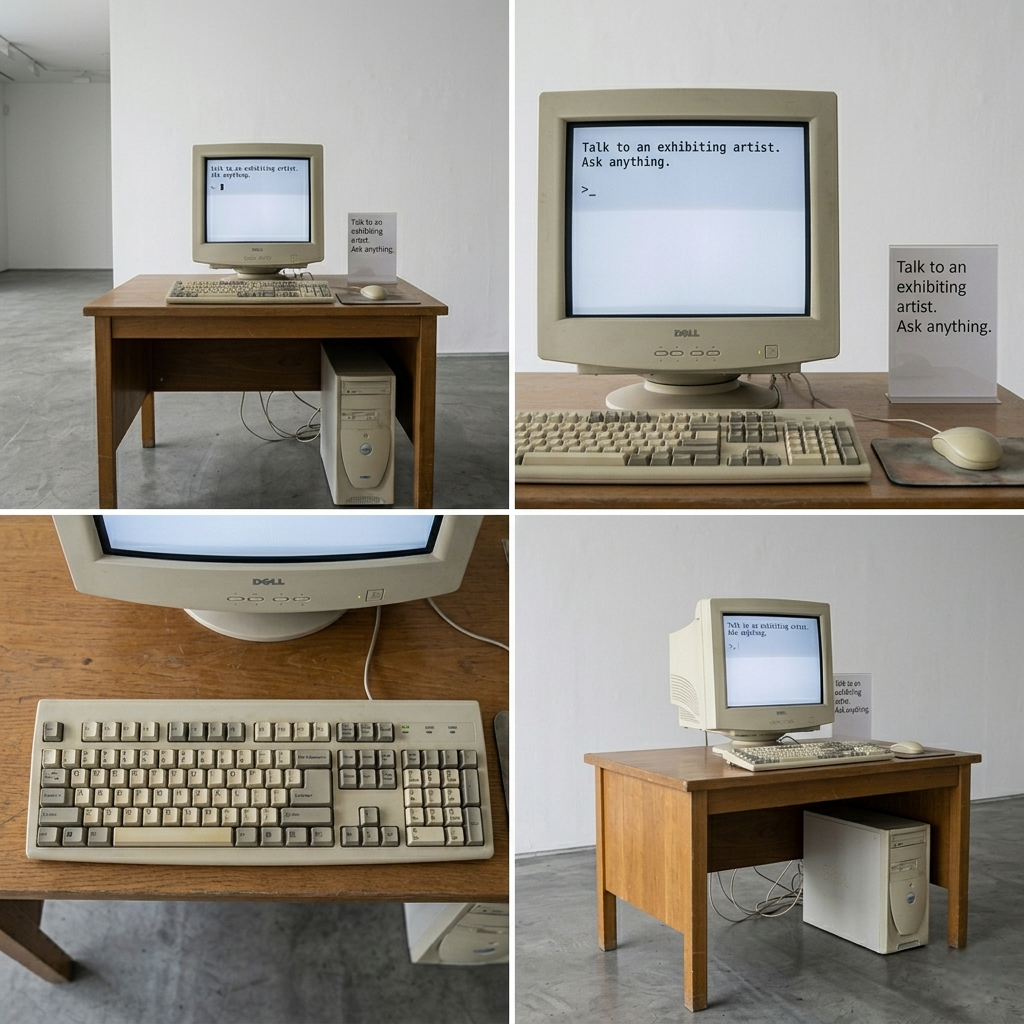
The images presented here stem from research and exploration. They do not constitute the realization of the work; in my practice, the proposal itself serves as the work.